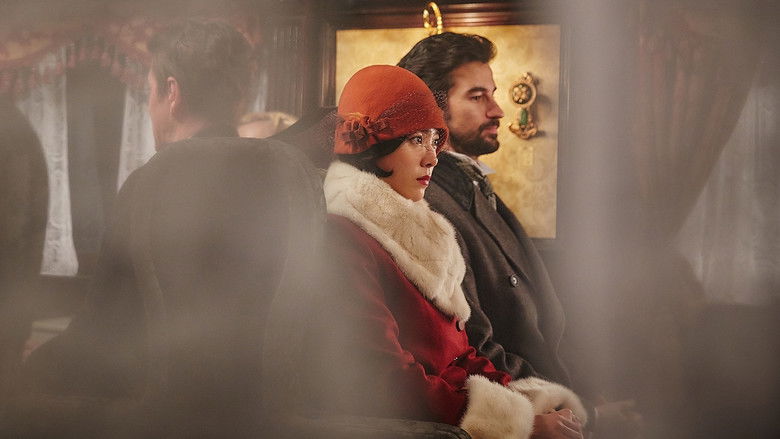

🎬 The Age of Shadows – Korean title Movie guide
If you’re into tense spy games wrapped in historical layers, The Age of Shadows sneaks up on you with some slick cat-and-mouse action. It’s got that delicious cocktail of stealth, suspense, and a dash of moral ambiguity that keeps you guessing.
Here’s a spoiler-light walkthrough: what it’s about, what it feels like, what lands (and what might not), plus where to watch.
Brooding, tense, and atmospheric with a grounded historical weight.
At a glance
Title: The Age of Shadows
Origin: South Korea
Type: movie
Genre: thriller
Release date: 2016-09-07
TMDB score: 7.2 / 10
AI recommendation score: 7.4 / 10
Who made it
Kim Jee-woon is known for blending genre elements with stylistic flourish, and here he channels noir influences while maintaining a steady rhythm that focuses on psychological tension. His direction skillfully builds a fog-laden atmosphere that accentuates the story’s covert machinations and shifting alliances. Although his pacing sometimes errs on the cautious side, his eye for visual storytelling keeps the intrigue simmering.
The stellar ensemble features Song Kang-ho and Gong Yoo delivering layered performances that anchor the narrative’s tension. Song’s nuanced portrayal conveys a man caught between duty and personal conflict, while Gong adds a quiet intensity to his role. Han Ji-min brings a subtle strength to her character, although the film doesn't fully explore her potential. Supporting cast members contribute solidly, enriching the world with believable, if occasionally underwritten, roles.
Cast & characters
- Song Kang-ho as Lee Jung-chool (Acting)
- Gong Yoo as Kim Woo-jin (Acting)
- Han Ji-min as Yun Gye-soon (Acting)
- Shingo Tsurumi as Higashi (Acting)
- Um Tae-goo as Hashimoto (Acting)
- Shin Sung-rok as Jo Hwe-ryung (Acting)
- Lee Byung-hun as Jung Chae-san (Acting)
- Park Hee-soon as Kim Jang-ok (Acting)
- Heo Sung-tae as Ha Il-soo (Acting)
- Kim Dong-young as Heo Chul-joo (Acting)
Background & setting
The Age of Shadows is set against the fraught backdrop of Korea under Japanese colonial rule during the late 1920s—a period marked by intense resistance movements striving for independence. This historical framework grounds the film’s story in a world where political tension is everyday life and nothing is as straightforward as it seems. The film uses the urban settings of Seoul and Shanghai not just as locations but as characters themselves, evoking shadows of secrecy and danger. Themes of loyalty, betrayal, and the grey areas of morality weave throughout, reflecting the complex choices faced by individuals during national upheaval. This setting might require some contextual understanding of this turbulent era, which helps appreciate the weight of the characters’ struggles even more.
Rhythms of Suspense and Style
One of the most intriguing facets of The Age of Shadows is its careful balancing act between contemplative pacing and building suspense. The film doesn’t rush into its conspiracy but rather lets the tension simmer, encouraging viewers to lean in and catch the subtle shifts in character relationships and power dynamics. This rhythm mirrors the meticulous nature of espionage itself—patient, attentive, and occasionally punctuated by moments of sharp intensity. Stylistically, Kim Jee-woon leans into a noir-inspired palette, using shadows and subdued lighting to reinforce the theme of concealment and secrecy. However, there’s an occasional formality in the mise-en-scène that might feel too polished, at odds with the raw grit of underground resistance work. The chemistry between the two leads plays a vital role in sustaining the mood, their understated interactions loaded with unspoken tension rather than showy confrontations. This contributes to an overall tone that’s both moody and intellectually engaging but could challenge those seeking a more kinetic experience.
Setting the

Set in the late 1920s, the film dives into the efforts of Korean resistance fighters trying to smuggle explosives from Shanghai back into Seoul. Their goal? Sabotage Japanese colonial facilities under tight surveillance. Meanwhile, Japanese agents are hot on their trail, making every move a high-stakes gamble. Early on, you get this palpable back-and-forth tension, with loyalties and identities becoming blurred. The setup feels grounded but charged, inviting curiosity about how loyalties will shift.
If you liked these, this might fit
Compared to other espionage dramas like The Spy Gone North or A Most Wanted Man, The Age of Shadows stands out for its period detail and moral ambiguity. It’s less about high-octane thrills and more focused on the psychological chess match, somewhat akin to classic noir titles. Unlike faster-paced spy films, it trusts the audience’s patience and rewards close attention with nuanced character work and atmospheric tension.
What Works and What Wobbles


My Take on the Shadows
Watching The Age of Shadows, I was drawn in by its steady undercurrent of tension—like a slow pinch tightening around the throat. The pacing is mostly deliberate, which pays off in building suspense but sometimes dips into overly long stretches that risk jittery attention. Visually, Kim Jee-woon’s direction evokes a moody atmosphere, the kind that feels heavy with unspoken stakes and foggy street corners. The style sometimes leans toward classic noir, but there are moments where it feels almost theatrical or overly polished, which might pull some viewers out of the gritty world it’s conjuring. Performances by Song Kang-ho and Gong Yoo anchor the story well, each with subtle expressions that hint at conflicting agendas. I did wish the female characters got a bit more narrative space, as their perspectives felt slightly sidelined. Overall, it’s a compelling watch if you appreciate tension and historical intrigue balanced with a few stylistic quirks.
Why it’s worth streaming now
Its deliberate pacing and layered character study make it more suited to OTT platforms where viewers can pause and reflect rather than in a theater craving non-stop action. The period setting and heavy historical themes also align well with streaming audiences who appreciate contextual depth and a slower-burn narrative. OTT accessibility allows for a focused viewing experience without the distractions sometimes present in theatrical releases.
Mini FAQ
Is prior knowledge of Korean history necessary to enjoy the film?
Not at all. While historical context enriches the experience, the film lays out the tension clearly enough for casual viewers to follow the stakes without specialized background knowledge.
How intense is the violence or action in the movie?
The film features tense action sequences but they are more strategic and suspenseful rather than explosive or graphic, focusing on stealth and psychological conflict.
Does the film have a lot of dialogue in Korean and Japanese?
Yes, the dialogue switches between Korean and Japanese to reflect the historical setting, but subtitles make it accessible for international audiences.
How to watch
In your selected region (KR), this title is available on: Google Play Movies, Watcha, wavve.
Platforms can change by region and time. Double-check inside your streaming apps.
👍 What you’ll probably like
- Strong atmospheric tension with well-crafted suspense
- Complex character dynamics and moral ambiguity
- Visually rich, with a noir-ish aesthetic
🤔 What might not work for you
- Some pacing lags that may test patience
- Style occasionally feels too polished for its gritty themes
- Female roles somewhat underdeveloped
Who Should Step Into the Shadows
Viewers who enjoy slow-burning spy dramas with historical depth and moral complexity will find this engaging; those expecting fast-paced action might find it a bit measured.
Final take
Final score: 7.4 / 10.
It’s a good match for viewers who notice tone shifts and small acting choices.
Explore more
More posts live on the main page. You can also search this site for related titles here.
This review is AI-assisted, based on public metadata. It is intended for international audiences discovering Korean and global OTT content.
This product uses the TMDb API but is not endorsed or certified by TMDb.
Leave a Reply