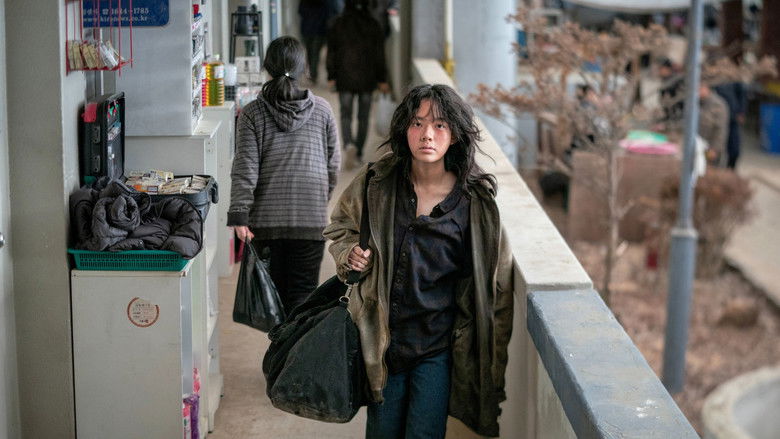

🎬 Concrete Market – Korean title Movie guide
Imagine the chaos of a post-apocalyptic world compressed into a single apartment complex turned marketplace. It’s a gritty, survival-of-the-fittest vibe, sprinkled with human moments and weird barter deals. Ready to step inside this concrete labyrinth?
A clear, no-big-spoilers overview for international viewers—setup, mood, standout moments, and streaming availability.
Claustrophobic and gritty with moments of quiet unease
Quick facts
Title: Concrete Market
Origin: South Korea
Type: movie
Genre: adventure
Release date: 2025-12-03
TMDB score: 6.0 / 10
AI recommendation score: 6.8 / 10
Who made it
Hong Ki-won directs with a clear eye for atmosphere and intimate tension, crafting a story that feels contained yet layered. His approach favors subtle character beats over grand spectacle, allowing the slow-burn drama to breathe within the confined setting. While occasionally gravitating toward familiar dystopian motifs, Ki-won’s direction shines in moments of human vulnerability.
Lee Jae-in delivers a nuanced performance, anchoring the emotional core without overplaying the desperation. Hong Kyung complements her with a more volatile presence that adds friction and depth. Supporting actors Jeong Man-sik, Yoo Su-bin, and Kim Guk-hee round out the ensemble with grounded portrayals that keep the community feeling real rather than caricatured.
Cast & characters
- Lee Jae-in as Choi Hee-ro (Acting)
- Hong Kyung as Kim Tae-jin (Acting)
- Jeong Man-sik as Park Sang-yong (Acting)
- Yoo Su-bin as Park Cheol-min (Acting)
- Kim Guk-hee as Mi-seon (Acting)
- Choi Jung-woon as Se-hee / Se-jung (Acting)
- Song Ji-in as So-jeong (Acting)
Background & setting
Set in a post-earthquake cityscape, the film focuses exclusively on an apartment complex that has survived the devastation. This building becomes a microcosm of society rebuilt from the rubble, where the economy turns into a barter system swapping everything from food and medicine to more esoteric goods. Themes of survival, trust, and human nature under duress dominate the narrative, illustrating how quickly societal norms dissolve when the usual structures collapse. The confined urban environment amps up the tension but also creates a rich playground for complex character interactions. While the setting draws on classic dystopian elements, the focus on an apartment building as a marketplace offers a fresh lens on community resilience and the barter economy’s moral ambiguities.
Tense Rhythms and Microcosm Dynamics
One of the film’s most compelling aspects is its rhythmic pacing that mirrors the ebb and flow of life inside the concrete market. Instead of constant high-stakes action, the story oscillates between charged exchanges and quieter, introspective moments—these moments of calm rarely feel wasted, instead offering windows into characters' psychological states and group dynamics. This pacing choice leads to a slow burn, which can challenge viewers expecting a standard post-apocalyptic adrenaline rush, but rewards those who enjoy mood and atmosphere. Moreover, the chemistry among the cast enhances subtle tensions and alliances, making each barter transaction feel significant beyond mere economics. The tone, while predominantly grim, occasionally inserts understated humor and humanity, preventing the mood from becoming oppressive. This blend of pacing and character interplay creates a layered experience that’s as much about surviving each other as surviving the world outside.
Setting the Stage in the Rubble

After a massive earthquake wipes out most of the city, the last standing apartment complex becomes a bustling market where survivors trade anything they can scavenge. We follow a handful of residents who navigate this new dystopia, balancing desperation with uneasy alliances. The story kicks off with the main characters trying to secure essential supplies, but it’s clear this micro-community has layers of tension waiting to unfold. No giant world-building dumps here—just a close-up look at how people adapt when society crumbles.
If you liked these, this might fit
Concrete Market shares thematic DNA with films like "The Platform" and "Snowpiercer" in its use of confined spaces to explore social hierarchies, but it leans more heavily into character-driven drama than high-concept sci-fi spectacle. Unlike broader dystopias, this film keeps its lens tightly focused, allowing for more intimate storytelling that mirrors chamber dramas more than sprawling epics.
Key Strengths and Weaknesses


A Nuanced Take on Survival and Society
I found Concrete Market to be a fascinating blend of claustrophobic tension and unexpected social dynamics. The way the film uses the confined setting adds a breathing rhythm to the narrative, though at times the pacing drags in quieter scenes that feel like they could’ve been trimmed. The atmosphere leans heavily on the gritty realism of barter and survival, which works well, but some stylistic choices—like the occasional overuse of shaky-cam during tense moments—sometimes distract rather than immerse. Acting is solid, especially from Lee Jae-in and Hong Kyung, whose chemistry brings subtle energy without feeling melodramatic. One caveat is that the film sometimes flirts with conventional dystopian tropes, so audience members looking for something radically new might find it a bit familiar. Still, the unique focus on a single building as a mini-society creates a compelling microcosm. Overall, I appreciated the film’s willingness to slow down and linger on character interactions rather than just action, although that might test the patience of viewers craving a faster pace. It’s a thoughtful dive into survival, community, and the price we pay when everything else falls apart.
Why it’s worth streaming now
This film feels tailor-made for streaming audiences who appreciate story-rich, atmospheric dramas that invite close attention rather than explosive pacing. Its limited setting and character focus make it a snug fit for home viewing, where the viewer can pause and absorb the layered social dynamics without feeling rushed. Plus, the subtle tension and claustrophobic mood can play nicely on smaller screens, enhancing a sense of immersion.
Mini FAQ
Is Concrete Market more action-oriented or character-driven?
Concrete Market leans strongly toward character-driven storytelling, focusing on social dynamics and survival psychology rather than nonstop action sequences.
Do I need to be familiar with Korean culture to understand the film?
Not necessarily. While there are some cultural nuances in group behavior and social hierarchy, the survival themes and barter system are universal enough to be easily understood.
Does the film explain the cause of the apocalypse in detail?
The film keeps the apocalypse background minimal, centering more on how people adapt after the event rather than on the event itself.
Where you can watch it
Streaming availability can change by region and platform. Check your OTT services (Netflix, Disney+, Prime Video, etc.) to confirm availability.
👍 What you’ll probably like
- Strong performances that ground the story emotionally
- Interesting use of a single location to build tension
- Gritty, realistic atmosphere of barter and survival
🤔 What might not work for you
- Pacing slows in the middle, causing some scenes to drag
- Stylistic choices like shaky-cam occasionally pull focus
- Familiar dystopian themes might feel predictable to hardcore sci-fi fans
Who Should Venture Into the Market
Perfect for viewers who appreciate character-driven post-apocalyptic settings and don’t mind a slower pace focused on social dynamics over nonstop action.
Verdict
Final score: 6.8 / 10.
If you like character chemistry and tone-first storytelling, this is a solid pick.
Explore more
More posts live on the main page. You can also search this site for related titles here.
This review is AI-assisted, based on public metadata. It is intended for international audiences discovering Korean and global OTT content.
This product uses the TMDb API but is not endorsed or certified by TMDb.
Leave a Reply